
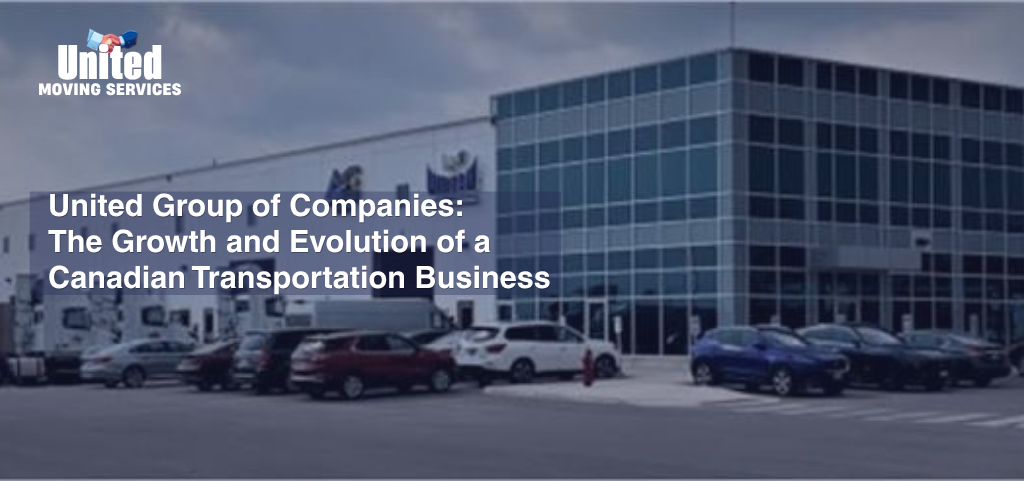
Discover the history of United Group of Companies, from its beginnings in 1999 to its growth in Canada’s transportation and logistics industry.
Building a Transportation Business Through Experience, Relationships and Growth
United Group of Companies is a Canadian transportation and logistics business based in Mississauga, Ontario. Established in 1999, the company has grown from a small transportation-related operation into a provider of a range of trucking, freight management and warehousing services.
For more than 25 years, the company has worked with businesses that depend on reliable transportation to move products between locations and keep their operations running.
Its development reflects the changing requirements of the transportation industry and the importance of building long-term customer relationships.
From its early beginnings as an agency truck school to its expanded fleet and logistics capabilities, this is the story of United Group of Companies, its growth and the services it provides today.
The Beginning: United Group of Companies in 1999
United Group of Companies identifies 1999 as the year the business was formed.
According to the company’s published history, its early operations began as an agency truck school.
The business started on a relatively small scale, with an initial location on Wilkinson Road and a fleet of five trucks by 2000.
These early years established the foundation for the company’s subsequent growth.
Transportation businesses require practical knowledge of the industry. Managing equipment, coordinating drivers, understanding customer requirements and maintaining reliable operations all contribute to the development of a sustainable business.
United Group’s early involvement in the trucking sector provided a foundation for expanding its transportation capabilities. The company gradually developed its operations as customer requirements and business opportunities evolved.
Expanding Operations and Building Fleet Capacity
One of the defining aspects of United Group’s history has been the expansion of its transportation operations.
The company’s published history identifies several important milestones:
- 1999: United Group was formed, beginning as an agency truck school.
- 2000: Operations at Wilkinson Road with five trucks.
- 2006: Expansion to Drew Road with approximately 30 trucks.
- 2015: Move to Glidden Road, with approximately 150 trucks.
- 2017: Expansion to Van Deemter Court, with approximately 200 trucks.
- 2019: Further expansion to 1191 Eglinton Avenue East, with more than 300 trucks.
These milestones illustrate the scale of the company’s development over time.
Growing a transportation fleet involves more than adding vehicles. Each stage of expansion brings additional operational requirements, including driver recruitment, dispatch coordination, equipment maintenance, insurance, scheduling and customer service.
As fleet capacity increases, businesses also need appropriate facilities and systems to manage their operations.
United Group’s growth reflects the importance of coordinating these different elements as the business develops.
The Importance of Facilities and Operational Infrastructure
Transportation operations depend on more than vehicles travelling between destinations. A company’s infrastructure plays an important role in maintaining operational continuity.
United Group’s official company information highlights several elements of its operational setup. These include a secured truck yard, equipment maintenance capabilities and office facilities that support operational meetings and coordination.
The company also describes its use of satellite tracking and a dedicated call centre to support customer communication and freight visibility.
Its equipment and operational facilities form part of the infrastructure supporting its transportation services.
Such infrastructure is important in an industry where equipment availability, vehicle maintenance and delivery coordination directly affect daily operations.
A well-maintained fleet can help reduce unnecessary downtime, while effective communication systems allow transportation teams to respond to customer requirements.
As transportation operations become more complex, having the right facilities and support systems becomes increasingly important.
From Trucking Operations to Broader Logistics Solutions
Transportation requirements differ from one business to another.
A manufacturer may require recurring freight transportation. A distributor may need additional warehouse capacity. A retailer may require dedicated delivery operations during peak periods.
These needs often extend beyond simply arranging a truck.
United Group of Companies has developed a range of transportation and logistics services to address different business requirements.
Dedicated Transportation Services
Dedicated transportation provides businesses with transportation capacity and resources aligned with their specific operational requirements.
Depending on the arrangement, this may involve dedicated drivers, vehicles, schedules and routes.
For companies with recurring transportation requirements, a dedicated model can provide greater consistency and coordination.
Freight Management
Freight management involves coordinating the movement of goods between locations.
This can include scheduling, transportation planning, load coordination and communication between the parties involved.
United Group offers freight management as part of its broader logistics service portfolio.
Warehousing
Warehousing provides businesses with space to store goods before they move to their next destination.
Storage requirements can vary depending on the type of products, inventory volumes and distribution schedules.
United Group includes warehousing within its logistics capabilities, allowing customers to consider storage alongside transportation requirements.
Cross-Docking
Cross-docking involves transferring goods from incoming transportation to outgoing vehicles, reducing the need for extended storage.
This approach can be useful for businesses managing time-sensitive distribution requirements.
The effectiveness of cross-docking depends on coordination between incoming shipments, available equipment and outgoing transportation schedules.
Drayage and Shunting
Drayage involves the transportation of freight over shorter distances, often as part of a larger supply chain movement.
Shunting involves moving trailers and vehicles within yards, terminals or designated operational locations.
Both services contribute to the movement and organization of freight within broader transportation networks.
Truck and Trailer Support
Vehicle and equipment maintenance are important parts of transportation operations.
United Group’s service offering also includes truck and trailer washing, lubrication, tire services and repairs through United Truck Center.
These services support the practical requirements associated with maintaining transportation equipment.
Businesses can review the company’s full range of transportation and logistics services to understand the capabilities available.
Supporting Different Transportation Requirements
Not every business has the same transportation requirements.
Some organizations maintain their own fleets but need additional capacity during busy periods. Others prefer to outsource specific transportation functions.
A company may require local deliveries, highway transportation, refrigerated equipment, flatbed services or a combination of different solutions.
United Group’s service portfolio includes:
- Local transportation and cartage.
- Highway transportation.
- United States transportation services.
- Less-than-truckload and truckload services.
- Dry vans and refrigerated equipment.
- Dry and refrigerated straight trucks.
- Flatbed transportation.
- Drayage and shunting.
- Dedicated dispatch management.
- Warehousing and cross-docking.
This range allows the company to work with businesses across different sectors and transportation requirements.
The company’s website identifies commercial goods, machinery, food and beverage, raw materials, packaging materials, building materials and manufactured goods among the industries and products it serves.
The appropriate transportation solution depends on the customer’s operational needs, freight requirements and delivery arrangements.
Technology and Transportation Coordination
Technology has become an important part of modern transportation operations.
Customers increasingly expect better visibility into shipments, while transportation companies need effective systems to coordinate drivers, vehicles and deliveries.
United Group highlights its use of satellite tracking and GPS technology across its transportation operations. The company also references Samsara technology for fleet tracking.
Fleet visibility can support several operational activities:
- Monitoring vehicle locations.
- Improving communication between dispatchers and drivers.
- Providing customers with shipment visibility.
- Coordinating delivery schedules.
- Supporting operational planning.
Technology does not replace the people responsible for managing transportation operations. Instead, it provides information that can help teams coordinate activities more effectively.
For transportation businesses managing multiple vehicles and customer requirements, this combination of experienced personnel and operational technology is important.
The People Behind United Group of Companies
A transportation company depends on the people who keep its operations moving.
Drivers, dispatchers, mechanics, warehouse personnel, customer service representatives and managers all contribute to the delivery process.
United Group describes itself as a family-run and community-driven business. Its company information emphasizes teamwork, customer relationships and the experience of its operational personnel.
The company also identifies itself as an equal-opportunity employer.
This focus on people is particularly relevant to trucking and logistics, where workforce experience and communication play important roles in maintaining service quality.
The experience of the United Group management team and its transportation professionals supports the company’s day-to-day operations.
United Group has also publicly shared examples of supporting employees and their families beyond the workplace.
One example is its support for the Milne family following the loss of Andrew Milne, a valued member of the United family.
Over two years, United Group contributed $10,000 directly to the Milne family and sponsored the annual golf tournament held in Andrew’s honour with an additional $2,500 contribution.
The company’s support reflects its stated belief that business relationships extend beyond day-to-day operations.
Leadership and the Company’s Development
United Group of Companies’ history is connected to the entrepreneurial journey of Dev Mangat.
His experience in Canada’s transportation industry began as a truck driver before progressing into dispatching, owner-operator operations and business ventures.
His journey included the establishment of United Training School in 1998 and the development of United Group around 2000. The company’s own history identifies 1999 as its formation year.
These early milestones provide context for the company’s development from its initial operations into a broader transportation and logistics business.
The story of Dev Mangat and his entrepreneurial journey provides further insight into the experience and business development behind United Group.
The development of a transportation company requires sustained attention to customer requirements, equipment, people and operational infrastructure. United Group’s history illustrates how the business has expanded across these areas over time.
United Group of Companies Today
Today, United Group of Companies provides transportation and logistics services from its base in Mississauga, Ontario.
Its service portfolio includes dedicated transportation, freight management, warehousing, cross-docking, drayage, shunting and various trucking solutions.
The company highlights more than 25 years of transportation and warehousing experience.
Its operations are supported by fleet capabilities, operational facilities, technology and an experienced team.
For businesses evaluating transportation partners, the company’s range of services provides opportunities to discuss different operational requirements with one transportation and logistics provider.
Whether the requirement involves dedicated fleet capacity, additional freight support, warehousing or specialized transportation, the appropriate solution depends on the nature of the business and its supply chain.
Businesses interested in working with the company can contact United Group of Companies to discuss their transportation and logistics requirements.
Looking Ahead
Canada’s transportation network plays an important role in moving goods, connecting businesses and supporting domestic and international trade, as outlined in Transport Canada’s annual report on the state of transportation in Canada.
As supply chains evolve, transportation providers must continue adapting to changing operational needs, technology and customer expectations.
United Group of Companies has developed its business through more than two decades of involvement in this industry.
From its early operations in 1999 to its expanded transportation and logistics capabilities today, its history reflects the importance of experience, infrastructure, customer relationships and the people behind the business.
The company’s focus remains on providing transportation and logistics solutions that support the day-to-day requirements of its customers.
To explore the company’s background and capabilities, visit the United Group of Companies website.
Frequently Asked Questions
When was United Group of Companies established?
United Group of Companies identifies 1999 as the year it was formed. Its early operations began as an agency truck school.
Where is United Group of Companies located?
United Group of Companies is based in Mississauga, Ontario, Canada.
Who is the CEO of United Group of Companies?
Dev Mangat is identified as the CEO of United Group of Companies in publicly available professional profiles.
What does United Group of Companies do?
United Group provides transportation and logistics services, including dedicated transportation, freight management, warehousing, cross-docking, drayage, shunting, and truckload and less-than-truckload transportation.
What industries does United Group of Companies serve?
The company identifies commercial goods, machinery, food and beverage, raw materials, packaging materials, building materials, manufactured goods and non-perishable goods among the sectors and product categories it serves.
Does United Group of Companies provide warehousing?
Yes. Warehousing and cross-docking are part of its logistics service portfolio.
Does United Group of Companies provide dedicated transportation?
Yes. The company offers dedicated transportation and logistics solutions designed around customer requirements.
Does United Group of Companies use fleet tracking technology?
Yes. The company highlights satellite tracking and GPS-based fleet visibility, including the use of Samsara technology.